

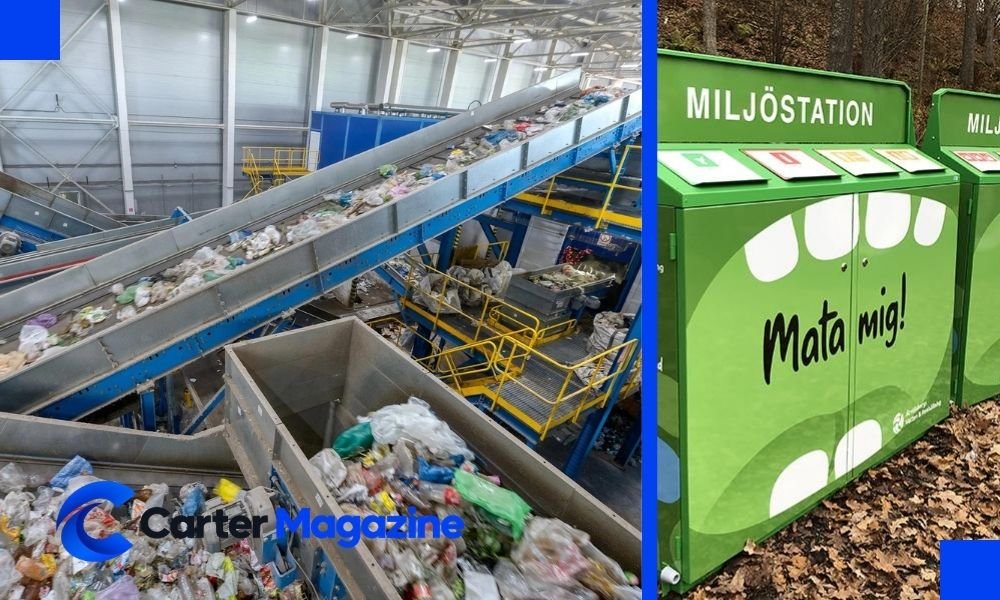
MataRecycler is a name that has become increasingly visible online in 2026, especially in articles discussing recycling, sustainability, smart waste management, and environmental technology. However, there is an important point readers should understand from the beginning: MataRecycler is not clearly established as one specific AI recycling machine or internationally recognized recycling company. MataRecycler.com currently presents itself mainly as an informational platform focused on responsible recycling and sustainability, while other websites use the name much more loosely. To understand the real recycling process behind many of these discussions, the U.S. Environmental Protection Agency’s guide to recycling basics and benefits provides a useful starting point.
MataRecycler Quick Overview
| Detail | Information |
|---|---|
| Keyword | MataRecycler |
| Main Association | Recycling and sustainability |
| MataRecycler.com | Recycling-awareness and information website |
| MataRecycler.org | Separate-looking digital magazine/content website |
| Physical Product Confirmed? | No clearly verified product found |
| AI Recycling System Confirmed? | No independent evidence found for one official system |
| Common Online Claims | Smart bins, AI sorting, waste reduction, material reuse |
| Better Description | Recycling information/concept rather than proven hardware |
| Main Topics | Recycling, waste reduction, sustainability and technology |
| Real Recycling Process | Collection, sorting, processing and manufacturing |
| Smart Recycling Technology | Exists generally, but not uniquely proven as “MataRecycler” |
| Best Approach | Separate verified facts from repeated online claims |
What Is MataRecycler?
The easiest way to understand MataRecycler is to separate the website from the broader keyword.
MataRecycler.com describes itself as a platform created to promote responsible recycling, sustainable practices, waste reduction, and environmental awareness.
Its About Us page says the platform publishes:
Recycling guides.
Information about different recycling processes.
Waste-management content.
Sustainability advice.
Environmental-awareness material.
Educational resources for individuals and organizations.
That description makes MataRecycler.com primarily an information website.
It does not describe itself there as a manufacturer selling a household recycling machine.
It does not list a famous AI-powered recycling robot.
And it does not present detailed specifications for one physical product.
This distinction matters because many other articles online describe MataRecycler very differently.
Why Is There So Much Confusion About MataRecycler?
Search for “MataRecycler” and you may find several completely different explanations.
One website may call it a smart recycling platform.
Another may describe a household recycling machine.
Another may use it as a general sustainability concept.
Some even describe sophisticated artificial-intelligence sorting systems.
The problem is that these descriptions often lack the details you would expect from a real technology product.
For example:
Who manufactures it?
What is the model number?
Where can you buy it?
What does it cost?
Where has it been installed?
Who developed the software?
Which cities use it?
Where are the independent test results?
Those questions often remain unanswered.
A 2026 investigation into the term found that different articles were making conflicting claims about MataRecycler and could not identify a confirmed manufacturer, product listing, app, funding history, or documented pilot program behind the supposed technology.
Is MataRecycler a Real Website?
Yes.
MataRecycler.com exists as an active website.
Its About Us page says its purpose is to provide recycling and sustainability information in a simple way.
Its contact page also describes MataRecycler as a content platform and invites readers to contact the site about recycling information, environmental responsibility, corrections, collaborations, and website support.
That provides clearer evidence for an informational website than for a physical recycling machine.
The site also has a privacy policy explaining that it may collect standard website information such as browser type, device information, visited pages, and IP addresses.
So readers should think of MataRecycler.com first as a digital content property.
What About MataRecycler.org?
There is also a MataRecycler.org website.
Its About Us page describes itself as a digital magazine providing information about sustainable recycling and technology.
However, its homepage includes a much wider variety of articles.
Topics shown there include gaming, technology, finance, AI, software errors, lifestyle subjects, and other general-interest material.
That means MataRecycler.org should not automatically be assumed to be the same organization as MataRecycler.com simply because the names are similar.
They may be separate websites.
Readers should always check the exact domain they are visiting.
Is MataRecycler an AI-Powered Recycling Machine?
This is probably the biggest misconception surrounding the keyword.
Several websites have described “MataRecycler” as though it were a sophisticated AI-powered waste-sorting system.
These descriptions sometimes mention:
Computer vision.
Machine learning.
Smart sensors.
Automated waste identification.
Robotic sorting.
Mobile apps.
Real-time dashboards.
Waste analytics.
Those technologies are absolutely possible.
In fact, real companies already use AI and robotic systems to identify and sort recyclable materials.
But that does not prove that one particular product called MataRecycler provides those features.
Recent investigations into the keyword found no independent documentation supporting the more dramatic claims attached specifically to a MataRecycler AI system.
AI Recycling Technology Is Real
This distinction is important.
Artificial intelligence really is changing parts of the recycling industry.
A recycling facility may use cameras to examine materials moving along a conveyor belt.
Computer-vision software can attempt to recognize different objects.
A robotic arm can then pick selected materials from the waste stream.
Real systems are already being developed for these purposes.
For example, Recycleye has demonstrated robotic waste-sorting equipment using computer vision and automated picking technology.
So the technology itself is not science fiction.
The problem appears when generic smart-recycling technology is described as though all of it belongs to an unverified MataRecycler product.
How Does Real Recycling Work?
The EPA describes recycling as collecting and processing materials that would otherwise be discarded and turning them into new products.
The recycling cycle can be simplified into three major stages.
1. Collection and Processing
People and businesses place recyclable materials into approved collection systems.
Depending on the community, this may involve:
Curbside bins.
Drop-off centres.
Deposit programs.
Commercial waste collection.
The materials are then transported to facilities where they can be sorted, cleaned, and processed.
2. Manufacturing
Processed recyclable material becomes an input for manufacturing.
For example:
Old paper may become new paper products.
Recovered metal can become new metal products.
Some plastics can be processed into new plastic goods.
Recovered glass can be reused in different applications.
The aim is to return useful material to the economy instead of simply throwing it away.
3. Buying Products With Recycled Content
The recycling loop works better when manufacturers and consumers actually use recycled materials.
If recyclables are collected but nobody wants the processed material, the system becomes much less effective.
That is why recycling is both an environmental process and a market.
The EPA notes that recovered materials are bought and sold much like other raw materials, with prices changing according to supply and demand.
What Materials Can Be Recycled?
The answer depends strongly on local recycling rules.
Common categories include:
Paper.
Cardboard.
Glass.
Aluminum.
Steel.
Certain plastics.
Batteries.
Electronics.
Textiles.
Tires.
Used oil.
Organic material.
Wood.
However, not every recycling program accepts every material.
The EPA specifically advises people to check local rules because acceptance differs between communities and recycling systems.
This is an important lesson for any platform promoting recycling.
Putting something into a recycling bin does not automatically mean it can be recycled locally.
Smart Recycling Could Help With Sorting
One major challenge in recycling is sorting.
Imagine thousands of bottles, cans, containers, boxes, and other objects moving quickly along a conveyor.
Different materials need to be separated.
That can require combinations of:
Human workers.
Magnets.
Screens.
Optical scanners.
Air jets.
Mechanical separators.
AI cameras.
Robotic arms.
Better identification technology could make sorting faster and more consistent.
This is probably why the MataRecycler keyword has become so strongly associated online with AI.
The concept sounds believable because real recycling companies are already moving in that direction.
But believable and verified are different things.
What Is Recycling Contamination?
Contamination happens when incorrect items enter the recycling stream or when recyclable materials are heavily contaminated with substances that interfere with processing.
For example, someone might place an unsuitable product into a recycling bin because they hope it can be recycled.
This is sometimes called wishcycling.
Unfortunately, guessing can create more work for recycling facilities.
That is why clear instructions matter.
EPA guidance recommends checking local recycling requirements rather than assuming every plastic, paper, battery, or electronic item belongs in the same bin.
Why Recycling Matters
Recycling can provide several environmental and economic benefits.
According to the EPA, recycling can help conserve natural resources and energy while reducing the amount of material requiring disposal.
It can also support jobs and manufacturing activity.
The basic idea is simple.
Imagine making a product entirely from newly extracted raw materials.
That may require mining, logging, drilling, processing, transportation, and energy.
If suitable recovered material can replace part of those virgin resources, some environmental pressure may be reduced.
However, recycling is not the first solution for every problem.
Reduce and Reuse Come Before Recycling
This is another important lesson often missed in recycling discussions.
The EPA’s waste-management hierarchy generally places source reduction and reuse ahead of recycling.
Suppose you own a reusable water bottle.
Using that bottle repeatedly may be better than constantly buying single-use bottles and relying on recycling afterward.
The same principle can apply to:
Clothes.
Furniture.
Electronics.
Packaging.
Containers.
Shopping bags.
Building materials.
Recycling is valuable.
But preventing unnecessary waste can be even better.
Could MataRecycler Represent a Broader Sustainability Idea?
Yes.
Even if MataRecycler is not a verified smart machine, the term works quite naturally as a broader idea.
It can represent a modern approach built around:
Reducing waste.
Reusing materials.
Improving sorting.
Educating consumers.
Using technology responsibly.
Recovering valuable resources.
Keeping material in circulation longer.
This connects with the idea of a circular economy.
Traditional production is often described as:
Take resources.
Make products.
Use products.
Throw them away.
A circular system tries to keep products and materials useful for longer through repair, reuse, remanufacturing, and recycling.
MataRecycler’s own website language emphasizes similar themes of resource optimization and responsible consumption.
How Could AI Improve Recycling?
If we look beyond the specific MataRecycler name, AI has several promising uses.
Better Object Recognition
Cameras can scan items moving through a sorting plant.
AI models may help identify shapes, materials, labels, and packaging types.
Robotic Picking
Robotic arms can remove selected objects from conveyor belts.
Waste Analytics
Software can record what types of materials are arriving at a facility.
That can help operators understand waste patterns.
Quality Control
AI may help identify incorrect materials in a particular recycling stream.
Smart Bins
Some experimental bins can use sensors to detect fullness or classify certain items.
Route Planning
Waste companies can use digital systems to improve collection routes and reduce unnecessary journeys.
All of these applications can make waste systems more efficient.
But any company claiming specific performance should provide evidence.
Be Careful With Specific MataRecycler Statistics
Some MataRecycler articles have repeated impressive figures, including claims of extremely high sorting accuracy or major increases in recycling rates.
The problem is that researchers examining these claims have struggled to trace the numbers to an independent study, named facility, company report, or documented trial.
That should immediately make readers cautious.
A percentage sounds scientific.
But a number without a source is only a claim.
Before repeating statistics, ask:
Who measured it?
Where was the system tested?
How many objects were sorted?
What types of waste were included?
Was the test independently reviewed?
Can the original study be found?
Those questions protect readers from misleading technology claims.
Can You Buy a MataRecycler Machine?
No clearly verified retail product called a MataRecycler machine was found during current research.
There does not appear to be a widely documented:
Official model.
Manufacturer.
Retail listing.
Price.
Technical specification sheet.
Installation manual.
Product certification.
That does not prevent someone from using MataRecycler as a brand name in the future.
But readers should be cautious when an article writes about buying or installing such a device without linking to a real manufacturer.
Is MataRecycler a Recycling App?
No clearly established mainstream MataRecycler recycling app could be verified either.
Some articles imply that an app could connect users with smart bins, recycling information, points, dashboards, or waste-tracking systems.
Again, these are realistic features for a recycling app generally.
But current evidence does not support treating all of them as proven MataRecycler features.
Before downloading any app claiming this name, check the official app store publisher, permissions, privacy policy, user reviews, and company information.
How Can Households Use the MataRecycler Idea?
You do not need an expensive AI robot to improve recycling at home.
A simple system can work well.
Keep clearly labeled bins.
Learn what your local service accepts.
Keep recyclable materials reasonably clean when required.
Flatten cardboard if local guidance recommends it.
Do not put batteries into ordinary household recycling unless your local service specifically allows it.
Keep hazardous materials separate.
Donate usable clothing and household items instead of throwing them away.
Repair products when practical.
The EPA provides separate guidance for common recyclables such as paper, plastic, glass, aluminum, batteries, electronics, clothing, oil, and tires.
That practical knowledge is more useful than an impressive-sounding technology claim without evidence.
MataRecycler for Businesses
Businesses can also apply the broader concept.
A company can begin by studying what it throws away.
For example:
How much cardboard is discarded every week?
How much food is wasted?
Are reusable shipping containers possible?
Can packaging be reduced?
Are electronics being disposed of correctly?
Could suppliers take packaging back?
Can old furniture be reused?
Businesses may also benefit from clearer recycling stations and employee education.
Technology can help collect data.
But good recycling begins with understanding the waste stream.
MataRecycler and the Future of Waste Management
Future recycling facilities will likely become increasingly automated.
Computer vision is improving.
Robotics is improving.
Sensors are becoming cheaper.
Businesses are collecting more waste data.
Manufacturers are under growing pressure to think about the full life cycle of products.
These developments could make recycling systems more intelligent.
But technology cannot solve everything by itself.
A sophisticated robot cannot completely fix poor product design.
AI cannot make every material economically recyclable.
Smart bins cannot solve excessive consumption.
Real progress will probably require several things working together:
Better product design.
Waste prevention.
Reuse.
Consumer education.
Improved collection.
Better sorting technology.
Demand for recycled materials.
Strong local infrastructure.
Is MataRecycler Legit?
The answer depends on what you mean.
MataRecycler.com is a real website describing itself as an educational recycling and sustainability platform.
However, claims that MataRecycler is one established AI-powered physical recycling system are much less convincing.
Independent searches have not found strong documentation for the product described in many generic articles.
So the safest conclusion is:
Treat MataRecycler as an informational website and emerging recycling-related keyword unless a specific product claim can be independently verified.
Final Thoughts
MataRecycler sounds like the name of a futuristic recycling machine, and that is exactly how some websites describe it.
But current evidence tells a more complicated story.
MataRecycler.com presents itself primarily as an informational platform focused on recycling, sustainability, waste management, and environmental awareness. Its own About Us page emphasizes educational content rather than selling AI recycling machinery.
At the same time, many unrelated articles have expanded the term into descriptions of smart bins, AI sorting systems, robotic waste processing, and impressive performance statistics.
Those claims are not consistently supported by a documented MataRecycler manufacturer, product, pilot project, or independent test.
That does not make the broader idea useless.
Smart recycling is real.
AI-assisted waste sorting is real.
Robotic recycling systems are real.
And recycling remains an important part of resource management.
The EPA describes the real recycling cycle as collection and processing, manufacturing with recovered materials, and completing the loop through the use of recycled products.
So when you see MataRecycler, remember the key difference:
The sustainability idea is believable. The website exists. But specific product and AI-performance claims still need proof.
That simple distinction makes it much easier to understand this increasingly popular keyword without turning online repetition into fact.
FAQs About MataRecycler
What is MataRecycler?
MataRecycler is a recycling-related term and website name. MataRecycler.com describes itself as an informational platform focused on recycling, waste reduction, sustainability, and environmental awareness.
Is MataRecycler a real website?
Yes. MataRecycler.com is an active website.
Is MataRecycler a real recycling machine?
No clearly verified physical product under that name was found in current research.
Is MataRecycler an AI recycling system?
Several websites describe it this way, but independent evidence supporting one official MataRecycler AI system is currently lacking.
Can I buy a MataRecycler?
No established manufacturer, model number, price, or major retail listing for a physical MataRecycler device could be verified.
Does MataRecycler have a mobile app?
No widely established official recycling app with all the features commonly attributed to MataRecycler could be independently verified.
What does MataRecycler.com do?
Its About Us page says it publishes educational information about recycling processes, waste management, sustainability, reuse, and environmental responsibility.
Is MataRecycler.org the same website?
MataRecycler.org is a separate domain presenting itself as a recycling and technology digital magazine. Its content also includes many unrelated general-interest topics, so readers should not automatically assume both domains have the same ownership.
Does AI really sort recycling?
Yes. Real recycling technology companies use computer vision and robotic systems to identify and pick materials from waste streams.
What happens to recycling after collection?
Recyclable materials are generally transported to recovery facilities where they are sorted, cleaned, and processed before being sold as material for manufacturing.
What materials can normally be recycled?
Common categories can include paper, cardboard, glass, metal, certain plastics, electronics, batteries, textiles, tires, and other materials, depending on local rules.
Is every type of plastic recyclable?
No. Plastic acceptance differs between local recycling systems, so people should check their local program rather than relying only on the recycling symbol.
Is recycling better than reuse?
The EPA’s waste-management hierarchy generally prioritizes reducing waste and reuse before recycling when practical.
What is smart recycling?
Smart recycling broadly refers to using technologies such as sensors, computer vision, data analytics, automated sorting, and robotics to improve waste collection or material recovery.
Are MataRecycler accuracy statistics reliable?
Specific percentages frequently repeated online should be treated cautiously unless they can be traced to an independently documented test or study.
Is MataRecycler safe?
The website exists, but ordinary internet precautions still apply. Avoid sharing unnecessary sensitive information and independently verify any financial, product, or technology claim before acting on it.
Why is MataRecycler becoming popular?
The keyword fits two major trends: growing interest in environmental sustainability and growing interest in artificial intelligence. This has encouraged many websites to publish different interpretations of the term.
What is the best way to use MataRecycler?
Treat it primarily as a source or keyword for learning about recycling and sustainability, while verifying important environmental or technical claims through authoritative sources.
For more technology, sustainability, and trending guides, visit Carter Magazine.
