

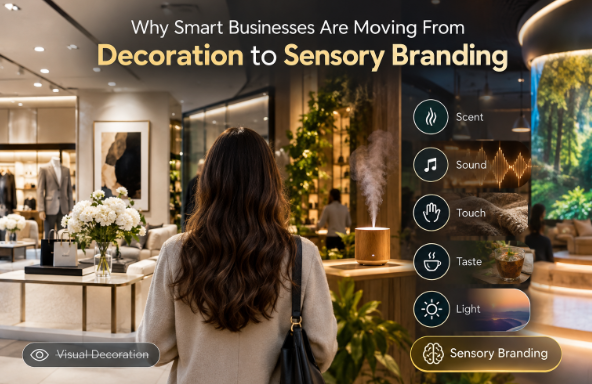
Businesses have always focused on creating attractive spaces. From stylish interiors and modern furniture to impressive lighting and visual displays, companies invest heavily in making their locations appealing. However, customer expectations are changing. Today, smart businesses are moving beyond traditional decoration and exploring sensory branding, where multiple senses are used to create memorable experiences.
While visual design remains important, customers do not remember a place only because of how it looks. They remember how it feels. The atmosphere, emotions, comfort, and overall experience influence how people connect with a brand. This is where scent marketing and advanced solutions like commercial diffusers are becoming an important part of modern business strategies.
The Shift From Visual Appeal to Complete Brand Experiences
For many years, businesses considered decoration the primary way to improve customer experience. A beautifully designed showroom, hotel lobby, office, or retail store could attract attention and create a positive first impression. However, visual elements alone are no longer enough in competitive markets.
Customers today interact with brands through experiences rather than just products or services. A customer entering a luxury hotel, premium retail store, or corporate office expects more than an attractive interior. They expect a complete environment that feels welcoming, comfortable, and connected with the brand identity.
Sensory branding focuses on creating these deeper emotional connections by engaging sight, sound, touch, and smell. Among these senses, fragrance has a unique impact because scent is closely linked with memory and emotions.
How Scent Influences Customer Experience
A pleasant fragrance can immediately change the perception of a space. When customers enter a business environment with a carefully selected signature scent, it can create feelings of comfort, relaxation, luxury, or freshness.
Research in consumer psychology shows that scent can influence mood and memory. A familiar and appealing fragrance can help customers associate positive emotions with a brand, making the experience more memorable.
For example, a luxury hotel may use a calming fragrance in its lobby to create a feeling of relaxation. A fashion store may choose an elegant scent to match its premium positioning. Corporate offices may use subtle fragrances to create a comfortable workplace atmosphere for employees and visitors.
This is why businesses are increasingly adopting professional commercial diffuser systems instead of relying on traditional air fresheners.
Why Commercial Diffusers Are Becoming Popular
Traditional air fresheners often provide temporary fragrance and limited control. Commercial diffusers are designed specifically for larger spaces and offer consistent scent distribution over extended periods.
Modern diffuser technology allows businesses to control fragrance intensity, coverage area, and timing. This makes them suitable for different environments such as hotels, restaurants, shopping malls, salons, healthcare facilities, offices, and luxury residences.
A well-designed commercial diffuser system helps maintain a consistent brand atmosphere throughout the day. Whether customers visit in the morning or evening, they experience the same carefully planned environment.
Sensory Branding Helps Businesses Stand Out
In crowded markets, differentiation has become a major challenge. Many companies offer similar products, similar services, and similar pricing. Creating a unique customer experience can become a powerful competitive advantage.
A signature scent can become part of a brand’s identity, similar to a logo, color scheme, or brand voice. When customers repeatedly experience the same fragrance in connection with a business, it can strengthen brand recognition.
Major industries such as hospitality, retail, and luxury services have already recognized the value of sensory branding. Businesses use fragrance to communicate qualities like elegance, trust, cleanliness, energy, or sophistication without saying a single word.
The Role of Scent in Hospitality and Retail
Hotels and resorts are among the biggest users of scent marketing because guest experience plays a critical role in customer satisfaction. A welcoming fragrance in reception areas, corridors, and lounges can influence the overall impression of a property.
Retail businesses also use scent strategically. The right fragrance can encourage customers to spend more time inside a store and create a more enjoyable shopping experience. When combined with attractive displays, music, and lighting, scent helps create a complete brand environment.
Restaurants, spas, and wellness centers also benefit from carefully selected fragrances because these businesses depend heavily on atmosphere and customer emotions.
Creating a Stronger Workplace Environment
Sensory branding is not limited to customers. Businesses are also using commercial diffusers to improve employee environments.
A pleasant office atmosphere can contribute to a more comfortable workplace experience. Fresh and balanced fragrances can help create a welcoming environment for employees, clients, and business partners.
Modern workplaces understand that environment influences productivity, creativity, and overall satisfaction. As companies focus more on employee experience, scent has become another element of workplace design.
Technology Is Making Scent Marketing Smarter
The latest generation of commercial diffusers combines fragrance technology with automation. Businesses can schedule fragrance release, adjust intensity levels, and manage scent coverage according to specific requirements.
Smart diffuser solutions help companies avoid inconsistent fragrance levels and ensure better control over their environment. This technology makes sensory branding more practical for businesses of all sizes.
From small boutiques to large commercial spaces, companies can now implement professional scent strategies without complicated maintenance.
Moving Beyond Decoration: The Future of Brand Experience
Decoration will always remain an important part of business design, but the future of customer experience is moving toward creating complete sensory environments. Businesses are realizing that memorable brands are not built only through what customers see but also through what they feel.
Sensory branding allows companies to create stronger emotional connections by designing spaces that engage multiple senses. Commercial diffusers are becoming an essential tool in this transformation by helping businesses create consistent, recognizable, and enjoyable environments.
As competition continues to increase, businesses that focus on meaningful experiences will have more opportunities to build lasting relationships with customers. The shift from decoration to sensory branding represents a new approach where every detail of a space contributes to the overall brand story.
