

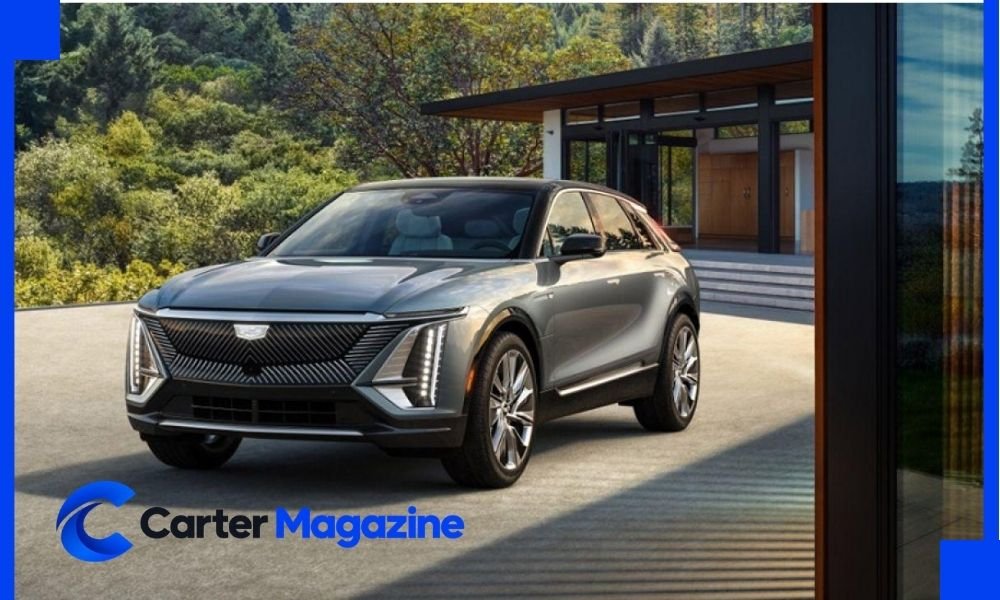
Do the driving modes in Cadillac LYRIQ offer different ranges or battery usages? Yes, they can affect how efficiently the vehicle uses electricity, but they do not change the battery’s actual capacity or create a new official driving-range rating. The Cadillac LYRIQ is a luxury electric SUV with selectable driving modes that adjust how the vehicle responds to the driver. These settings can influence acceleration, steering feel, traction, and ultimately how much energy is consumed during a journey.
Imagine driving your Cadillac LYRIQ along a quiet highway. You want a comfortable ride, steady acceleration, and enough battery power to reach your destination. Now imagine taking the same vehicle onto a winding road, where quicker responses and a more engaging driving experience become important.
The driving mode you choose can change how the vehicle feels in these situations. But does selecting Sport Mode automatically reduce your range? Can Tour Mode help you travel farther? And what happens when you switch to Snow/Ice Mode?
Understanding these differences can help LYRIQ owners make better decisions about everyday driving, battery efficiency, and long-distance travel.
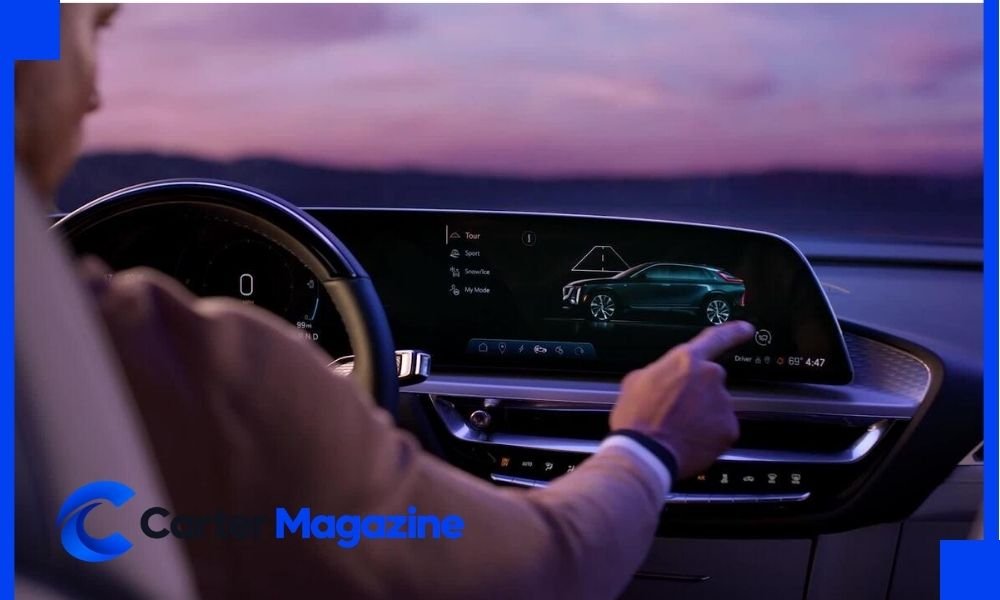
Quick Overview: Cadillac LYRIQ Driving Modes and Battery Usage
| Feature | Information |
|---|---|
| Vehicle | Cadillac LYRIQ |
| Vehicle type | All-electric luxury SUV |
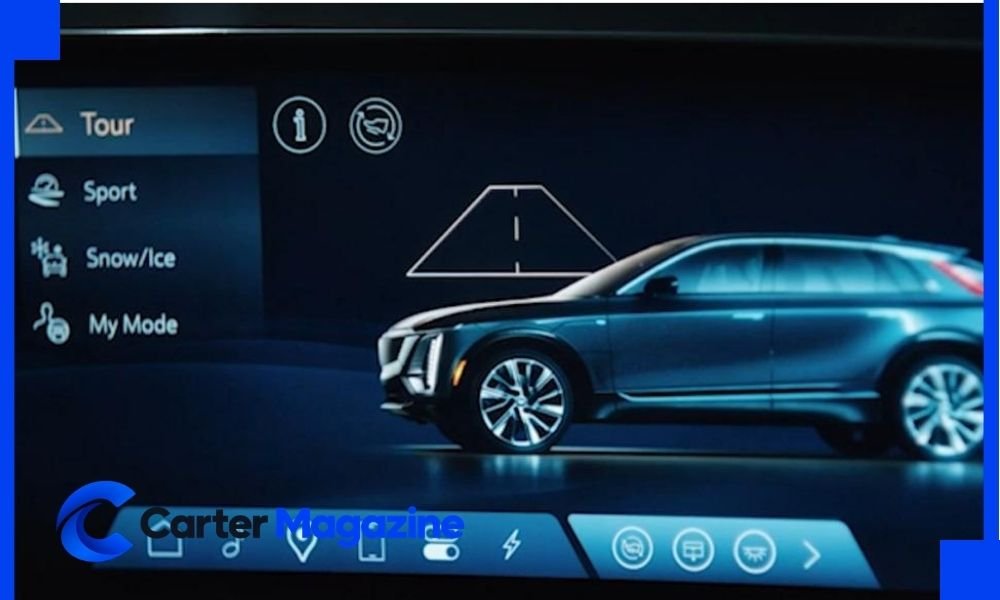
| Main driving modes | Tour, Sport, Snow/Ice, My Mode |
| Battery capacity | Approximately 102 kWh usable in many model years |
| Energy source | Rechargeable lithium-ion battery |
| Most suitable general mode | Tour |
| Performance-focused mode | Sport |
| Slippery-road mode | Snow/Ice |
| Customizable mode | My Mode |
| Do modes change battery capacity? | No |
| Can modes influence energy consumption? | Yes, indirectly |
| Main factors affecting range | Speed, temperature, acceleration, terrain, HVAC, tires |
Features and range ratings vary by model year, drivetrain, trim, and market. This guide focuses on the conventional LYRIQ EV rather than LYRIQ-V performance-specific settings.
Understanding the Cadillac LYRIQ Driving Modes
The Cadillac LYRIQ offers several driving modes designed for different road conditions and driving preferences.
Rather than changing the physical battery, these modes adjust certain vehicle settings.
For example, one mode may provide smoother accelerator responses, while another may make the vehicle feel more responsive.
The important point is that the vehicle continues using the same battery regardless of the selected mode.
What changes is how the vehicle responds to your inputs, which can influence energy consumption.
Tour Mode: Designed for Everyday Comfort
Tour Mode is the standard setting for comfortable daily driving.
It provides balanced accelerator response and steering characteristics suited to normal roads.
This makes it a natural choice for commuting, shopping trips, and highway journeys.
Because Tour Mode encourages predictable and comfortable responses, it can make smooth driving easier.
However, selecting Tour Mode does not guarantee the lowest possible energy consumption.
A driver who accelerates aggressively in Tour Mode can still use more electricity than someone driving gently in Sport Mode.
Sport Mode: More Responsive Performance
Sport Mode gives the Cadillac LYRIQ a more engaging driving character.
Depending on the vehicle configuration, it adjusts accelerator response, steering feel, and other performance-related settings.
The vehicle may feel quicker to respond when the driver presses the accelerator.
This can make overtaking and driving on winding roads feel more dynamic.
But there is an important difference between quicker accelerator response and higher energy consumption.
Sport Mode does not necessarily draw extra battery power simply because it is selected.
Instead, its sharper response can encourage stronger acceleration, which increases energy use.
If a driver maintains the same speed and acceleration pattern, the difference in consumption between Tour and Sport may be small.
Snow/Ice Mode: Better Control on Slippery Roads
Snow/Ice Mode is intended for situations where traction is limited.
It changes the vehicle’s response to help drivers control acceleration more smoothly on slippery surfaces.
This can be helpful on snow-covered roads, icy streets, or other low-grip conditions.
The mode is designed primarily for vehicle control, not maximum driving range.
Driving in winter may reduce range because cold temperatures affect battery efficiency and increase heating requirements.
Those losses should not be attributed entirely to Snow/Ice Mode.
My Mode: A Personalized Driving Experience
My Mode allows drivers to customize supported driving characteristics.
Depending on the LYRIQ’s model year and equipment, settings may include steering feel, accelerator response, and other available preferences.
For example, someone might prefer comfortable steering with a more responsive accelerator.
Another driver might choose a gentler configuration for relaxed commuting.
My Mode does not provide a separate battery capacity or a guaranteed range advantage.
Its effect on energy consumption depends largely on the selected settings and how the vehicle is driven.
Cadillac LYRIQ Driving Modes Compared
| Driving mode | Main purpose | Likely effect on energy use |
|---|---|---|
| Tour | Comfortable everyday driving | Can support efficient driving with gentle inputs |
| Sport | Sharper driving response | May increase consumption with aggressive acceleration |
| Snow/Ice | Improved control on slippery surfaces | No fixed penalty; winter conditions often increase consumption |
| My Mode | Personalized vehicle settings | Depends on configuration and driving behavior |
There are no established official range ratings for each individual mode in this comparison.
A fixed claim that Sport Mode reduces range by 10% or Tour Mode adds 20 miles would be misleading without controlled testing.
Do Cadillac LYRIQ Driving Modes Actually Change Battery Range?
The short answer is yes, but mostly indirectly.
The LYRIQ’s driving modes can influence electricity consumption because they change how the vehicle responds to the driver.
However, they do not physically increase or decrease the amount of energy stored in the battery.
Think of the battery as a water tank.
Changing driving modes does not make the tank larger or smaller. Instead, the settings can influence how quickly the stored energy is used.
A driver who accelerates smoothly, maintains moderate speeds, and avoids unnecessary braking will generally use less electricity.
Someone who frequently accelerates hard and drives at high speeds will usually consume more.
This is why driving behavior matters more than the name of the selected mode.
Does Tour Mode offer the longest range?
Tour Mode is generally a sensible choice for drivers who want comfort and predictable responses.
Its balanced accelerator characteristics can make efficient driving easier.
However, Cadillac does not provide a separate EPA-certified range rating specifically for Tour Mode.
The vehicle’s official range is determined through standardized testing and depends on its model year, drivetrain, and configuration.
Tour Mode may help drivers maintain smooth habits, but it is not a dedicated range-extending feature.
Does Sport Mode drain the battery faster?
Sport Mode can lead to higher battery consumption when drivers take advantage of its sharper acceleration response.
Rapid acceleration requires substantial electrical power.
If the driver repeatedly accelerates strongly, energy consumption increases.
However, Sport Mode itself is not necessarily responsible for a major loss of range.
At a steady highway speed, with comparable driving conditions, the difference between modes may be much smaller than expected.
The biggest difference usually comes from how the driver uses the accelerator.
How Much Range Does the Cadillac LYRIQ Offer?
The Cadillac LYRIQ has been offered with different drivetrain configurations, including rear-wheel drive and all-wheel drive.
Its EPA-estimated range varies by model year and equipment.
For example, the 2025 Cadillac LYRIQ had the following published EPA estimates:
2025 Cadillac LYRIQ — EPA-estimated range
Rear-wheel drive
326 mi
Approximately 525 km
All-wheel drive
319 mi
Approximately 513 km
RWD
326 miles
AWD
319 miles
These are model-specific EPA estimates, not separate ratings for Tour, Sport, Snow/Ice, or My Mode. Other model years and wheel configurations may differ.
These figures demonstrate another important point.
The vehicle’s drivetrain and configuration can influence its official range, even though the driving modes themselves do not have individual EPA range ratings.
All-wheel-drive models can consume additional energy under certain conditions because of differences in drivetrain design, weight, and operation.
However, actual efficiency depends on the vehicle and driving conditions.
Does Sport Mode Use More Battery Than Tour Mode?
To understand this question, imagine two drivers traveling the same distance.
The first driver selects Tour Mode and accelerates gradually.
The second selects Sport Mode and repeatedly accelerates quickly.
Even if both travel exactly 20 miles, the second driver will generally use more energy because rapid acceleration increases power demand.
But what happens if both drivers maintain the same speed and use the accelerator gently?
The energy consumption could be quite similar.
That is because factors such as aerodynamic resistance, rolling resistance, road gradient, and temperature remain important regardless of driving mode.
Example of energy consumption
Consider a hypothetical journey of 100 miles.
If the LYRIQ averages 3 miles per kilowatt-hour, it would use approximately 33.3 kWh of electricity.
If less efficient driving reduces the average to 2.5 miles per kilowatt-hour, the same journey would require 40 kWh.
That is approximately 6.7 kWh more electricity.
This is an illustration of how driving efficiency affects battery usage, not a measured Tour-versus-Sport comparison.
The calculation shows why driving habits can have a meaningful impact on range.
Does Snow/Ice Mode Reduce Cadillac LYRIQ Battery Life?
Snow/Ice Mode is designed to improve controllability on slippery surfaces.
It is not designed to damage the battery or significantly change battery capacity.
However, winter driving introduces several challenges for electric vehicles.
Cold weather can reduce the amount of energy available for driving and increase the energy required to heat the cabin and battery.
Snow-covered roads can also increase rolling resistance.
These conditions may cause drivers to notice lower estimated range while using Snow/Ice Mode.
But the mode itself is not necessarily the main reason.
Why cold weather affects electric vehicles
Lithium-ion batteries operate differently at low temperatures.
When temperatures fall, battery chemistry becomes less efficient.
The vehicle may need to use electricity to warm the battery to an appropriate operating temperature.
Cabin heating also requires energy.
As a result, a Cadillac LYRIQ that performs efficiently during mild weather may show reduced range during freezing conditions.
This is normal for electric vehicles.
Drivers should plan additional charging stops when traveling long distances in severe winter weather.
Does My Mode Help Save Battery Power?
My Mode can make the Cadillac LYRIQ feel more comfortable or responsive based on the driver’s preferences.
However, it should not be confused with a dedicated Eco Mode.
Depending on the model year and configuration, drivers may be able to customize accelerator response and steering characteristics.
Choosing gentler settings may make smooth acceleration easier.
That can indirectly support efficient driving.
Still, the actual amount of electricity consumed depends on road conditions, speed, temperature, and driver behavior.
A personalized driving mode cannot guarantee additional miles from a full charge.
What Uses the Most Battery in a Cadillac LYRIQ?
Driving mode is only one small part of the efficiency picture.
Several other factors can have a much greater effect on energy consumption.
Highway speed
Driving at high speeds increases aerodynamic drag.
As speed rises, the vehicle needs more power to push through the air.
This means driving at 75 mph will generally consume more energy per mile than driving at 60 mph under otherwise similar conditions.
For long journeys, moderate highway speeds can help preserve range.
Rapid acceleration
Strong acceleration requires high electrical power.
Electric vehicles can deliver torque quickly, making rapid acceleration feel effortless.
However, repeated hard acceleration increases energy consumption.
Smooth accelerator inputs help avoid unnecessary power demand.
Heating and air conditioning
The LYRIQ uses battery electricity to operate its climate-control systems.
Heating and cooling the cabin can reduce the amount of energy available for driving.
The impact varies depending on outside temperature, cabin settings, and journey length.
Preconditioning the cabin while the vehicle is plugged in can help reduce the energy needed after departure.
Tire pressure
Underinflated tires increase rolling resistance.
This means the vehicle must use more energy to maintain speed.
Keeping tires at the recommended pressure supports efficiency, handling, and tire life.
Drivers should follow the pressure specifications provided by Cadillac for their vehicle.
Hills and road conditions
Driving uphill requires additional energy.
Descending can allow the vehicle to recover some energy through regenerative braking.
However, not all the energy used while climbing can be recovered.
Wind, rain, rough roads, and heavy loads can also affect consumption.
How Regenerative Braking Helps the Cadillac LYRIQ Save Energy
Regenerative braking is one of the most useful efficiency features in an electric vehicle.
When the LYRIQ slows down, its electric motor can operate as a generator.
Instead of wasting all the vehicle’s motion energy as heat through conventional braking, the system converts some of it into electricity.
That electricity is returned to the battery.
The LYRIQ offers features such as One-Pedal Driving and Regen on Demand.
One-Pedal Driving
One-Pedal Driving allows the driver to control much of the vehicle’s acceleration and deceleration using the accelerator pedal.
When the driver releases the pedal, the vehicle slows through regenerative braking.
This can make stop-and-go driving easier and reduce the need to use the brake pedal frequently.
It can also help recover energy that would otherwise be lost through friction braking.
However, it does not create free electricity.
Energy recovery is always subject to efficiency losses.
Regen on Demand
The LYRIQ also offers a steering-wheel paddle that allows the driver to request regenerative deceleration.
This feature can be useful when approaching traffic, intersections, or slower-moving vehicles.
The amount of regenerative braking available depends on vehicle conditions, including battery state of charge and temperature.
Drivers should always remain prepared to use the regular brake pedal when necessary.
How to Get More Range From Your Cadillac LYRIQ
For everyday efficiency, Tour Mode is a practical starting point.
However, a few simple habits are more important than the selected mode.
Cadillac LYRIQ range-saving checklist
0 of 7 habits checked
Reset
These habits can help drivers make better use of the electricity stored in their battery.
They are especially valuable during long-distance journeys where charging opportunities may be limited.
Does Changing Driving Modes Damage the Cadillac LYRIQ Battery?
Switching between Tour, Sport, Snow/Ice, and My Mode during normal operation does not inherently damage the battery.
The vehicle’s electronic control systems manage power delivery and protect important components.
However, long-term battery health is affected by several factors.
These include temperature exposure, charging habits, battery age, and usage patterns.
Repeated high-power driving can increase battery heat, but the vehicle has systems designed to manage operating temperatures.
For everyday use, drivers should follow Cadillac’s battery care and charging recommendations.
It is also useful to understand the difference between battery range and battery health.
Range describes how far the vehicle can travel before recharging.
Battery health describes how much energy the battery can store as it ages.
Changing a driving mode may influence the first through driving behavior, but it does not directly change the battery’s long-term storage capacity.
Which Cadillac LYRIQ Driving Mode Is Best?
The best driving mode depends on the situation.
Tour Mode is a sensible choice for most daily journeys because it balances comfort and responsiveness.
Sport Mode is useful when the driver wants sharper acceleration response and a more engaging feel.
Snow/Ice Mode is designed for low-traction conditions where smooth control is especially important.
My Mode is useful for drivers who prefer a personalized combination of available settings.
None of these modes is universally best for every journey.
For maximum efficiency, smooth driving, sensible speeds, proper tire pressure, and careful climate-control use generally matter more than the selected mode.
Frequently Asked Questions
1. Do the driving modes in Cadillac LYRIQ offer different ranges?
They can indirectly influence real-world range by changing accelerator response and driving behavior. However, Cadillac does not assign separate official EPA range ratings to Tour, Sport, Snow/Ice, and My Mode.
2. Which Cadillac LYRIQ mode saves the most battery?
Tour Mode is generally a good choice for comfortable, efficient everyday driving. However, there is no verified fixed battery-saving percentage for Tour Mode compared with the other settings.
3. Does Sport Mode drain the LYRIQ battery faster?
It can lead to higher consumption when drivers use stronger acceleration. If driving speed and acceleration remain similar, the difference may be relatively small.
4. Does Snow/Ice Mode reduce electric vehicle range?
Snow/Ice Mode does not have a published fixed range penalty. Lower winter range is often caused by cold temperatures, heating demands, and challenging road conditions.
5. Can I change Cadillac LYRIQ driving modes while driving?
The LYRIQ allows drivers to select supported driving modes through its vehicle controls. Drivers should follow the instructions and restrictions in the owner’s manual for their particular model year.
6. Does My Mode improve battery efficiency?
My Mode allows customization of supported vehicle characteristics. Gentler accelerator settings may encourage smoother driving, but they do not guarantee a specific improvement in range.
7. Does One-Pedal Driving increase Cadillac LYRIQ range?
One-Pedal Driving can help recover energy during deceleration, especially in stop-and-go traffic. The benefit depends on driving conditions and does not guarantee a fixed increase in range.
8. What is the best driving mode for long highway journeys?
Tour Mode is a practical choice for long highway trips. Maintaining a moderate, steady speed and planning charging stops are more important for range than selecting a particular driving mode.
Final Thoughts
So, do the driving modes in Cadillac LYRIQ offer different ranges or battery usages?
Yes, they can affect real-world energy consumption, but mainly through changes in vehicle response and driver behavior rather than a direct change in battery capacity.
Tour Mode provides a comfortable, balanced experience for everyday journeys. Sport Mode delivers sharper responses that can encourage higher energy use. Snow/Ice Mode focuses on traction, while My Mode allows drivers to customize supported settings.
For drivers who want the longest practical range, smooth acceleration, moderate speeds, regenerative braking, and good battery management are the most important habits.
The Cadillac LYRIQ’s driving modes give owners flexibility, but understanding how the vehicle uses electricity is the real key to getting more miles from every charge.
