

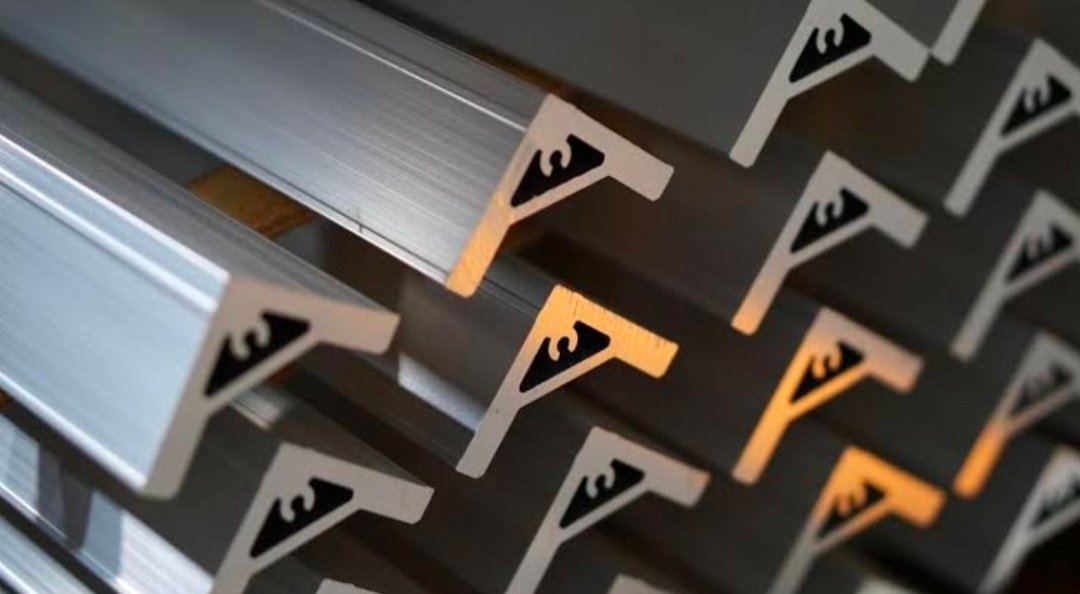
When manufacturers require high MOQs, it can make your aluminum extrusion project unnecessarily complicated. A business might only require a prototype, a few test pieces, or a small production run, but many traditional extrusion suppliers are only interested in large orders. In contrast, short-run manufacturing allows for more flexibility, customisation, and speedy delivery of exactly manufactured profiles without the need for any unnecessary inventory commitments.
-
Breaking Free From High Minimum Order Requirements
Traditional extrusion production is generally optimized for large quantities. When the order includes thousands of identical profiles, the high-volume manufacturers invest their equipment, tooling schedules, and production capacity. Consequently, smaller projects can be overlooked or not be a viable economic option.
This causes problems for those who want to test the product or use it in controlled production but require smaller quantities, such as product developers, engineers, and manufacturers. The purchase of excess parts for meeting minimum order quantities can lead to higher material expenses, storage needs, and financial risk.
A short-run aluminium extrusion supplier offers an alternative route of manufacture. Short-run services can be used for one-off prototypes, small production batches, and limited quantities, as opposed to a huge production commitment. This flexibility enables manufacturers to order as per the actual needs of the project and not based on any volume limits.
-
Why Small Production Runs Support Better Product Development
Low-volume extrusion offers great flex in the product development process. A design is not often the same from the initial idea to the finished product. Engineers might have to consider fit, structure, assembly, or appearance before they approve a design.
These evaluations are more feasible if they are producing a small quantity first. Changes can occur before large quantities of material are invested in an old design.
This also minimizes the impact of design changes. Manufacturers will not have to discard thousands of unusable profiles after finding a dimensional problem, but can tweak the design between production runs.
The production in the short run thus allows for a more regulated development process. Important information about geometry, material behavior, finishing, and machining requirements can be gained from each batch.
-
Custom Profiles Without Unnecessary Production Commitments
Perhaps one of the most significant benefits of aluminum extrusion is the ability to create long parts with consistent and possibly complicated cross-section shapes. Using custom dies, manufacturers can design profiles that incorporate channels, ribs, grooves, cavities, and even structural features in one continuous profile.
However, with smaller projects, access to custom profiles has traditionally been difficult. If you’re a large extrusion company, then limited orders might seem like an inefficient way to work compared to the old, well-known high-volume production.
Custom geometry becomes more attainable with short-run manufacturing. With extrusion partnerships and complementary production capabilities, 3ERP is able to serve the low-volume manufacturing needs of projects, taking them from the concept of a specialty profile to the finished product.
This can be particularly helpful when a section is long and consistent, but only needs limited quantities in a part. The main shape can be formed efficiently in the extrusion process, and other processes can do final shaping.
-
Combining Extrusion With Precision Secondary Manufacturing
With an extruded profile, the production process doesn’t necessarily end with the finished product. Numerous designs need holes, threads, cutouts, tapered areas, or other features that would not be possible with the continuous extrusion profile.
Combining manufacturing processes provides greater design flexibility:
- CNC milling can create precise holes, pockets, slots, and detailed machined features.
- CNC turning can refine cylindrical or rotational features after extrusion.
- Cutting and bending can prepare profiles for specific assemblies or structural applications.
- Laser engraving can add durable identification marks, serial numbers, or functional labels.
- Surface finishing can improve appearance, corrosion resistance, and application-specific performance.
This combination enables manufacturers to adopt a hybrid strategy, leveraging the capabilities of both technologies based on the specific requirements of the Application. This can minimize the need for unnecessary material removal that might otherwise have to be formed into the profile.
-
Choosing the Right Aluminum Alloy for the Application
Even for short-run projects, material selection is still a consideration. Various aluminum alloys provide varying qualities of strength, corrosion resistance, workability, and surface properties.
Extrusion applications are made with alloys like 6061 and 6063. The use of alloys should be based on the operating conditions and mechanical requirements and not just on the alloy being available.
The structural part might need other properties than those of an architectural profile, electrical housing, heat sink, or transportation part. There are some applications that favour strength and others that rely on corrosion resistance or surface finish.
In the short run, production makes it possible for the manufacturer to test the materials without incurring large stocks. This will make validation of early material easier when application requirements are still being developed.
-
Maintaining Quality When Production Volumes Are Small
The amount should not be reduced at the expense of the standard of manufacture. Components that are used in prototype or short-run production are often subject to special scrutiny, as they may have an impact on subsequent production decisions.
Dimensional accuracy is of significance where extruded parts are to be secondarily worked or are to be joined with other parts. Straightness and surface condition can also impact subsequent operations and final assembly performance.
A structured quality process can involve dimensional inspection, surface verification, and documentation for traceability. It is also advisable to check the components prior to precision post-machining to ensure that the subsequent machining operations are started with appropriate extruded material.
Quality-driven manufacturing practices are used throughout 3ERP’s rapid prototyping and production services for projects that demand control and flexibility in manufacturing quantities.
-
Faster Delivery for Time-Sensitive Manufacturing Projects
Traditional tooling and production schedules can lead to longer project times, especially if the supplier is more inclined to go with larger orders. A long wait can result in a delay in testing, design decisions, and product launches for prototype development.
Short-run extrusion services are aimed at removing this barrier. Better coordination between the extrusion and secondary processing can help to eliminate unnecessary manufacturing hand-offs.
A supplier that can manage the coordination of the extrusion, CNC machining, and finishing also decreases the difficulty of handling several different production stages independently. The workflow can be structured according to the needs of the final product, rather than the activities of the moving parts in different organizations.
When projects involve delivery to the world, efficient production planning is equally as important. A shorter manufacturing cycle can help organizations break the design validation to limited production cycle without having to wait for high volume schedules.
Conclusion
MOQs shouldn’t be a hurdle for manufacturers to consider custom aluminum extrusion solutions. If a prototype or small quantity of items is needed, buying large numbers of them can lead to cost, stock, and design issues.
The short-run extrusion route is more flexible and allows for a variety of profile shapes, low quantities, precise secondary processes, and useful finishing techniques. Complex parts can be developed without assuming that large production volumes are the starting point by incorporating extrusion along with machining and other manufacturing processes.
For companies that are dealing with changing designs, special parts, or limited production runs, flexible manufacturing may make aluminum extrusion much more attainable. The ability to manufacture what a project actually needs makes extrusion a tool that can be used in today’s product development and low-volume manufacturing.
For More Information: Click Here
